
Finding Calm in Small Routines as a Dementia Caregiver

Hello, welcome to another moment of clarity.
I used to think calm meant having a peaceful day.
A quiet house. No unexpected problems. No rushing around. No difficult conversations. Perhaps even a little time to myself without feeling as though I should be doing something else.
Caregiving has changed that definition for me.
These days, calm rarely arrives as a whole peaceful day. More often, it appears for a few minutes. Sometimes it is nothing more than a cup of tea, the curtains being opened in the morning, or sitting quietly before the next thing needs my attention.
I have started to wonder if perhaps calm was never really about everything around me being calm.
Perhaps sometimes it is simply about noticing the small moments when it is.
Dementia Has Made Ordinary Days Less Predictable
One of the hardest things about dementia is how quickly something familiar can become unfamiliar.
A routine that worked perfectly yesterday might not work today.
Something that usually happens without much thought can suddenly become difficult. A plan I had in my head for the morning can change before the morning has properly begun.
I think I spent quite a long time believing that if I could just create the right routine, things would become more predictable.
There is something reassuring about a timetable. If breakfast happens at this time, medication at that time, and everything else follows neatly behind, perhaps the day will feel easier.
But dementia does not always cooperate with timetables.
Some mornings simply don't go according to plan.
There are days when getting ready takes much longer. Days when something that normally feels straightforward suddenly becomes confusing. Days when I have to abandon what I thought we were going to do and concentrate on what is actually happening in front of me.
I have had to accept that a routine can help without being able to control the day.
That distinction has taken me a while to understand.
I've Started Looking at Routines Differently
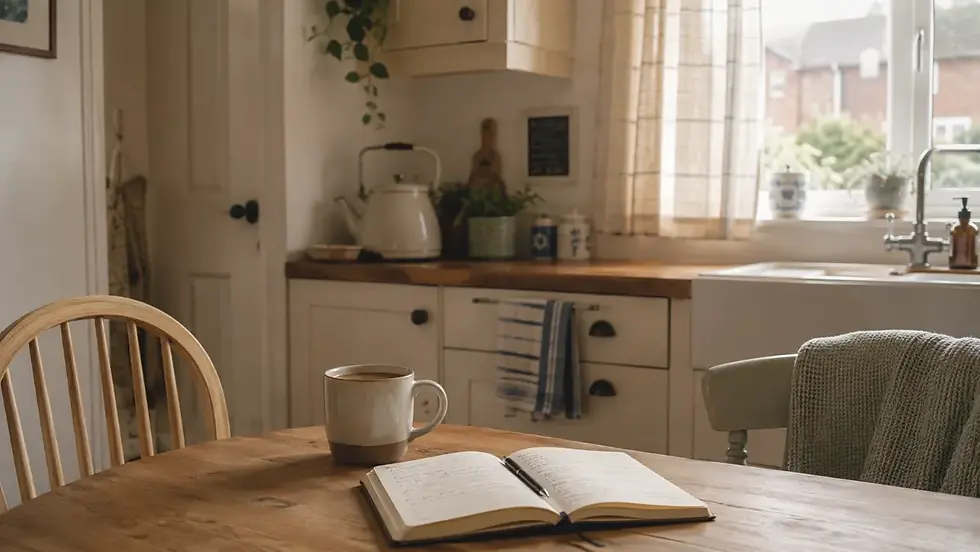
I don't really think of routines as timetables anymore.
I think of them more as familiar landmarks.
There are certain things that happen in roughly the same way, even when the rest of the day is unpredictable.
Opening the curtains.
Making tea.
Putting things back in the same place.
Sitting down for a few minutes.
Hearing something familiar in the background.
These things can seem almost too ordinary to matter.
But perhaps that is exactly why they matter.
They don't demand much from me. They don't require the day to be perfect. They simply provide something familiar to return to.
I've started to notice that some of the smallest routines carry a surprising amount of comfort.
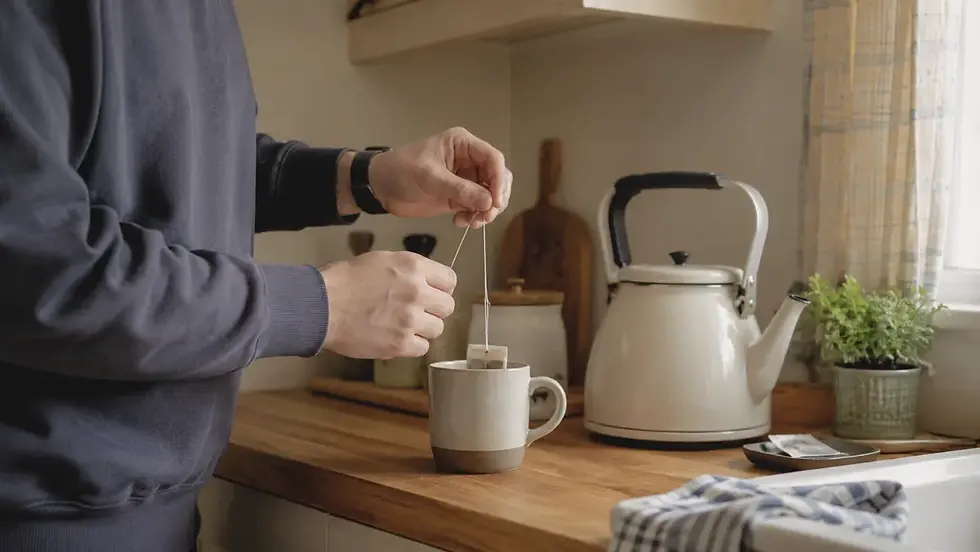
Making a cup of tea is one of them.
There is something about the sequence of it that I find reassuring. Fill the kettle. Get the mug. Make the tea. Sit down.
It is such a small thing.
But when so much of caregiving involves responding to whatever happens next, doing something I know almost without thinking can feel grounding.
Perhaps routines don't always need to make life easier.
Maybe sometimes they simply remind us where we are.
The Small Routines That Help Me
My mornings have become less about getting everything done and more about finding a familiar beginning.
I like opening the curtains and letting some daylight into the room.
Then I make tea.
Sometimes I sit for a few minutes before moving straight into the practical side of the morning.
It doesn't always happen.
Some mornings need my attention immediately. Other mornings allow me those few quiet minutes.
I have stopped seeing that pause as something I need to earn.
There is also something helpful about giving everyday things a home.
Things that are used regularly tend to stay in the same places.
Not because I have created some perfectly organised system, but because searching for something when I am already tired is one more small demand I don't necessarily need.
There is enough mental noise in caregiving without wondering where something has been put.
But even this is flexible.
I don't want to turn these things into rules.
That would rather miss the point.
The routine is there to support the day, not to dictate it.
For me, there is a difference between having a rhythm and having a schedule.
A schedule says, "This must happen now."
A rhythm feels more like, "This is what we usually do."
That small difference has made routines feel much gentler.
One of My Most Important Routines Is Doing Less
This is probably one of the things I have found hardest to accept.
Sometimes the routine I need most is doing less.
Just five minutes.
Sitting down with my tea.
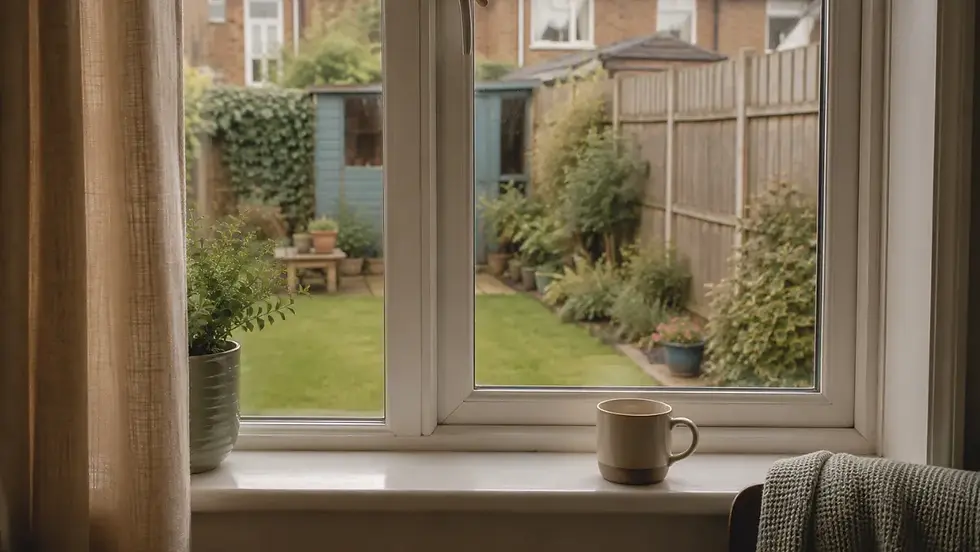
Looking out of the window.
Listening to something I enjoy.
Letting myself exist without immediately asking what needs doing next.
It sounds simple when I write it down.
In reality, it can feel surprisingly difficult.
There is always another job.
Another medication to think about.
Another appointment.
Another thing that could be organised.
Another reason to tell myself that I will sit down later.
But later doesn't always arrive.
So I have started trying to protect small pauses when I can.
Not every day.
Not perfectly.
Just when there is an opportunity.
I think those moments remind me that I am still a person outside my role as mum’s carer.
That matters more than I realised.
Caregiving can gradually fill so much of your identity that you can forget there was a version of you who simply sat with a cup of tea because you wanted one.
No task attached.
No reason required.
Just you.

When the Routine Doesn't Work
Of course, there are days when none of it works.
The curtains stay closed longer than usual.
Tea gets forgotten.
Plans change.
The familiar rhythm disappears underneath confusion, tiredness, frustration or simply one of those days when everything feels harder.
I used to see those days as evidence that I had got something wrong.
Perhaps I had not planned well enough.
Perhaps I should have done something differently.
I'm learning to question that way of thinking.
A routine that can bend is not a failed routine.
Maybe flexibility is actually part of the routine.
If the day changes, the routine changes with it.
That doesn't mean the familiar things have stopped being useful. It simply means they are not rules.
There is something quite freeing in that.
I don't have to make every day look like the day before.
I don't have to recreate yesterday's calm.
I only have to meet today's version of the day.
Sometimes that means tea at the usual time.
Sometimes it means tea much later.
Sometimes it means abandoning the plan altogether.
And perhaps that is okay.

Calm Doesn't Have to Last All Day
I think this is the part I am beginning to understand.
Calm doesn't have to last.
It doesn't have to stretch from morning until bedtime to be worthwhile.
A five-minute pause can still be a pause.
A quiet cup of tea can still be quiet even if the afternoon becomes difficult.
Opening the curtains to a little sunlight can still be a gentle beginning, even if the rest of the morning doesn't follow it.
For a long time, I think I measured a good day by how smoothly everything went.
Now I am starting to notice something else.
I notice the moments within the day.
The little pockets that don't ask anything of me.
The familiar things.
The ordinary things.
The moments when I can breathe without thinking about the next task.
They may not change the circumstances.
They don't make dementia disappear.
They don't guarantee that tomorrow will be easier.
But they give me somewhere to rest for a moment.
And sometimes that is enough.
Finding Calm in Small Routines
Perhaps that is what routines have become for me.
Not a way of controlling the day.
Not a promise that everything will go smoothly.
Just small familiar points scattered through an unpredictable life.
Making tea.
Opening the curtains.
Putting something back where it belongs.
Sitting down for five minutes.
Looking out of the window.
Listening.
Breathing.
Doing something ordinary simply because it feels familiar.
I don't know if anyone else feels this, but there is something comforting about realising that I don't need to create calm everywhere.
I can't.
Some days will always be difficult.
Some days will feel long.
Some days will contain more uncertainty than I would choose.
But perhaps I can notice the small moments of calm that are already there.
Maybe I can stop expecting them to last all day.
Maybe I can let them be enough for the few minutes they belong to.
That feels different from trying to make caregiving peaceful.
It feels more honest.
And perhaps more achievable too.
A Closing Thought
I think I used to look for calm as though it were somewhere I needed to get to.
A calm day.
A calm morning.
A calm week.
Now I am beginning to see it differently.
Maybe calm is not always a destination.
Maybe sometimes it is a few minutes that quietly appear between everything else.
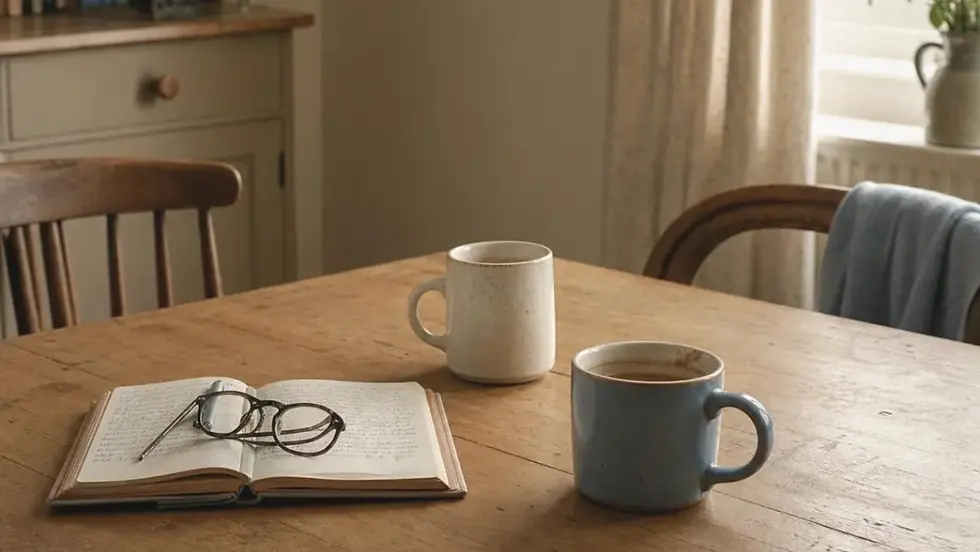
A familiar cup of tea.
A little daylight coming through the curtains.
A moment sitting down before getting up again.
A familiar object in its usual place.
A breath taken without immediately thinking about what comes next.
None of these things solve the difficult parts of caregiving.
They don't need to.
They are simply small reminders that even within an unpredictable life, there can still be moments that feel familiar.
And perhaps we don't need to protect calm for the whole day.
Perhaps we only need to notice it when it arrives.
Then, when we can, give ourselves permission to stay there for a little while.
Until next time,
James
If you are caring for someone with dementia, I wonder what your small moments of calm look like. Maybe they are just as ordinary as mine.
If you'd like to continue that quiet conversation, @momentsofclarityblog is another place where I share the small reflections, difficult moments and unexpected bits of clarity that come with everyday caregiving.


Comments